When You Just Can’t Take Anymore

Everyone has a breaking point, and when we’re pushed to the limit, everything just feels overwhelming. We become emotionally exhausted and may find ourselves thinking, “I just can’t take anymore.” It all feels like too much to bear, and as much as we want to be strong, standing solidly in faith, we’re so emotionally exhausted that we don’t think we can even connect to it anymore. Whether it’s dealing with loss, disappointment, heartbreak, or the overwhelming demands of life, we can’t stop thinking that we’re at the edge, and our reservoir of strength feels depleted.

How do you bounce back from this? Well, the one gift we must give ourselves is to remember that, with the Lord, it’s entirely possible to bounce back—to be rescued from the edge by His mighty hand. God promises us something powerful in times of emotional exhaustion: He is our strength when we have none left. In Isaiah 41:10 (NLT), He says, “Don’t be afraid, for I am with you. Don’t be discouraged, for I am your God. I will strengthen you and help you. I will hold you up with my victorious right hand.” When we’re at that breaking point and feel as though we’re going to shatter into pieces, this is exactly where God wants us to turn to Him. It’s where His strength can shine the brightest, and where we can truly experience His sustaining power. The Apostle Paul said in 2 Corinthians 12:9 (NLT): “But he said to me, ‘My grace is all you need. My power works best in weakness.’ So now I am glad to boast about my weaknesses, so that the power of Christ can work through me.” This reminds us of God’s amazing grace, and His willingness to use His power on our behalf.

Am I Humbling Myself?

Sometimes, when life becomes unbearable, our first instinct is to fight against whatever is coming at us. We might think we can stand strong in our own strength, but life has a way of teaching us that this simply isn’t true. God calls us to humble ourselves in the midst of our struggles. We must bow to His sovereignty, power, and strength, recognizing that we can’t do this alone. James 4:10 (NLT) tells us, “Humble yourselves before the Lord, and he will lift you up in honor.” Our Heavenly Father invites us to release control and let Him work things out of us. Humbling ourselves means admitting that we don’t have all the answers and that we need Him to guide us through the storm. When we surrender our will for His Will, God promises to lift us up.

Am I Willing to Let Go and Let God?

When broken pieces fall to the ground, our tendency is to want desperately to pick them up and put them back together. Our burdens are heavy on us, but we’ve convinced ourselves that if we can’t fix it, things won’t come together the way we think they should. We cling to the struggle instead of clinging to the One who holds our tomorrows—who can fix any issue or problem perfectly. In God’s Word, He invites us to release our worries into His capable hands. 1 Peter 5:7 (NLT) encourages, “Give all your worries and cares to God, for he cares about you.” This is not just a suggestion—it’s a call to trust that God will handle what we cannot.

Letting go doesn’t mean giving up—it means trusting that God’s plans for us are greater than anything we could put together ourselves. It means letting go and letting God–surrendering our anxiety and worries and allowing Him to take full control. This is where true peace begins. Philippians 4:6-7 (NLT) tells us: “Don’t worry about anything; instead, pray about everything. Tell God what you need, and thank him for all he has done. Then you will experience God’s peace, which exceeds anything we can understand. His peace will guard your hearts and minds as you live in Christ Jesus.”

Can I Patiently Endure?

As God’s children, all of us have what it takes to patiently endure. The question is whether we will trust God through to the end. He deserves this level of trust from us, and we are never disappointed when we have faith in Him. Yes, in the middle of our struggles, patience can seem like an impossible task. We want relief right now, but God often calls us to wait and trust in His timing. Romans 12:12 (NLT) teaches us to “Rejoice in our confident hope. Be patient in trouble, and keep on praying.” Patience isn’t about passive waiting—it’s about actively trusting God’s process while we endure the challenges that come our way.

Endurance is part of the Christian journey. James 1:2-4 (NLT) says, “Dear brothers and sisters, when troubles of any kind come your way, consider it an opportunity for great joy. For you know that when your faith is tested, your endurance has a chance to grow. So let it grow, for when your endurance is fully developed, you will be perfect and complete, needing nothing.” Our character and faith are strengthened through this testing.  So, when you feel like you’re about to break, remember that God is doing something powerful in you through your patience.

Will I Trust the Victory Christ Won for Me?

When we’re overwhelmed, it’s easy to forget the victory Christ has already won for us. The challenges we face might seem insurmountable, but Romans 8:37 (NLT) reminds us, “No, despite all these things, overwhelming victory is ours through Christ, who loved us.” Christ has already conquered sin, death, and every power that would seek to defeat us. The victory is already won—it is a finished work. When we remember this, it helps us to press on, knowing that even in our weakest moments, his victory covers us. We are more than conquerors, not because of our own strength, but because of his finished work on the cross.

At some point, life is going to throw all of us for a loop. It’s going to rock us to our cores, to the point where we finally understand that God is in control, not us. When life pushes us to the edge, He is faithful to deliver us. God offers us hope and strength. And it’s not a surface level, temporary solution that He offers us; it’s the fullness of deliverance and restoration He bestows upon us. We don’t have to give up. With humility, trust, patience, and faith in Christ’s victory, we can make it through. As we lean on His promises, we can endure, knowing that He is holding us up with His victorious right hand. You are not alone in your struggle, and you do not have to carry the weight on your own. God is with you, and through Him, you can overcome.■

Scripture quotations marked (NLT) are taken from the Holy Bible, New Living Translation, copyright © 1996. Used by permission of Tyndale House Publishers, Inc., Wheaton, Illinois 60189. All rights reserved.

“When You Just Can’t Take Anymore”, written for DomesticAbuseAwareness.Org ©2026. All rights reserved. All done to the glory of God through Jesus Christ, our Lord!
A Prospering Soul – Part 2

Part 2- The Blockers of Idolatry, Love of Money, and People Worship

Abraham, the father of faith, emerged in the ancient times of the Old Testament. This was a pivotal period because God established His covenantal relationship with His people. Abraham’s record marks a crucial turning point in biblical history. God chose him to be the father of a great nation that would eventually bring forth the Messiah, our beloved Savior, Jesus Christ. The most defining characteristic that is so meaningful to believers is the longing of Abraham’s heart for a son. For years, he dreamed of having a son who would carry on his name and legacy. As the years passed and Abraham grew older, he was convinced all hope was lost. He was well beyond his prime, and so was his wife, Sarah. The dream of fathering a child seemed to slip further from their reach.

God Always Has a Plan

Abraham didn’t know it, but God had an awesome plan for his life. Genesis 12:1-2 (NLT) tells us: “The Lord had said to Abram, “Leave your native country, your relatives, and your father’s family, and go to the land that I will show you. I will make you into a great nation. I will bless you and make you famous, and you will be a blessing to others.” God promised Abraham that he would be the father of a great nation when Abraham was 75 years old. It’s important for us to note the significant lapse of time between the promise and its fulfillment. It wasn’t until 25 years later, when Abraham was 100 and his wife Sarah was 90, that they would see the birth of their son, Isaac.

This long waiting period wasn’t all fun and games. The depth of Abraham’s faith took time to cultivate. Wait mode can be taxing on the soul, and for Abraham, it was marked by doubt, fear, pain, and moments of questioning. These often come to the surface when we’re waiting on a blessing to manifest. When they do, we must not disregard these heavies, but confront and overcome them. This is often what makes the delay necessary. During those 25 years, Abraham had to deepen his trust and reliance on the One who had made the promise. Those years of waiting were not wasted; they were a time of refining, testing, and growing Abraham’s faith to the point where he could finally see that nothing, not even his own limitations or the passing of time, could hinder God’s Will.

The First Step: Separation from Idolatry

Genesis 12:1 tells us that God called Abraham to leave his native country, his relatives, and his father’s family. This was the first step of Abraham’s journey toward fulfilling his divine purpose. It began with this crucial step of separation. In the culture of Abraham’s time, fathers were central to the family unit and held all the authority. Their influence shaped not only the household but also the community and spiritual life. To leave his father and his father’s family was no small thing; it meant detaching from everything that Abraham had known and trusted.

We should try to put ourselves in his shoes; being surrounded by siblings and relatives, living comfortably with them, and enjoying their support for much of his life. Abraham was not a young man when God called him, but in his senior years. So, he was immersed, as was the culture then, in the close bonds of a community of family and friends. Imagine how daunting it would be to leave it all behind. There’s no doubt that this tapestry of loved ones was central to his identity, as it is for us in some respect. Yet, Abraham was obedient to God’s request.

Abraham’s father, Terah, was an idolater. In Joshua 24:2 (NLT), it states, “Long ago your ancestors, including Terah, the father of Abraham and Nahor, lived beyond the Euphrates River and worshiped other gods.” This sets the stage for understanding the environment in which Abraham grew up. His community was steeped in idolatry, and though the Bible doesn’t explicitly detail how deeply Abraham’s father’s idolatry affected him, we can imagine that it shaped much of his early life and understanding of the world. Idols, whether they are made of stone, wood, or false ideas, are powerful influences on the mind, heart, and behavior of people. They lead people to turn their backs on God and His Will. The constant exposure to this must have subtly affected Abraham’s thoughts, desires, and decisions in some way.

For Abraham to step into the fullness of God’s promise, there had to be a clear break from that idolatrous influence. We have to know that the Lord’s command to “leave your native country, your relatives, and your father’s family” wasn’t just about geography; it was about separation from the spiritual and cultural influences that would hinder Abraham from fulfilling his divine calling. Idolatry, in all its forms, is an enemy to the prospering soul. It draws people’s attention away from the one true living God and places it on temporary, powerless things; this is a dark and deadly way to live. God, in His infinite wisdom, knew that for Abraham to truly walk in faith and receive His promise, he needed to step away from the old ways, the old patterns, and the old allegiances that had been established in his family.

Its Influence on the Heart

A prospering soul is required for us to fulfill our purpose, become the person God has destined us to be, and to receive all that He has in store for our lives. But we have to recognize that the soul’s prosperity can be hindered by strongholds of sin and toxic patterns. Among the most insidious blockers to a thriving soul are idolatry, the love of money, and the worship of people. The fruition of the promise came to Abraham when his mind, heart, and soul were no longer hindered by doubt and darkness. This is the case with us as well. When we place anything—whether it’s material wealth, the approval of others, or even ourselves—above God, we set up false idols that rob us of peace, joy, and the intimacy in our relationship with Heavenly Father that He requires and deserves.

Idolatry is anything we place above God in our hearts, whether consciously or unconsciously. It’s not just about bowing to statues or worshiping false gods—it’s about what we prioritize, trust, and depend on more than Him. Money, success, relationships, status, or even our own desires can become idols when they take the throne that belongs to God alone. 1 John 5:21 (NLT) warns us: “Dear children, keep away from anything that might take God’s place in your hearts.” Idolatry isn’t just about misplaced priorities—it deeply affects the condition of our hearts. When we allow something other than God to take center stage, it reshapes the way we think, feel, and respond to Him. Over time, idolatry hardens our hearts, making us less sensitive to God’s voice and more attached to what we crave.

The danger of idolatry is that it creates a divided heart. Instead of fully loving and trusting God, we become torn and fragmented. One part of us still desires Him, but another part is consumed with something else. This inner conflict makes it harder to surrender to His Will. When we idolize money, our hearts grow anxious and restless, constantly striving for more. When we idolize relationships, our hearts become dependent on people for validation and security, rather than resting in God’s love. When we idolize success, our hearts become full of pride. We start to measure our worth by achievements rather than by God’s grace. This sets us up for disaster.

Jesus Christ said in John 4:24 (NLT): “For God is Spirit, so those who worship him must worship in spirit and in truth.” Idolatry corrodes the heart in a way that disconnects it from worshipping God in spirit and truth. It blinds the heart, distorts our perception, and makes us justify the compromises we’ve made against our faith. We convince ourselves that our desires are harmless, even when they are pulling us away from God. The more we chase after these things, the less room we leave for His presence.

God desires undivided devotion because He knows that anything we elevate above Him will ultimately leave us empty. The only cure for an idolatrous heart is to return to Him in full surrender. When we let go of the things we’ve clung to and allow God to take His rightful place, our hearts find the peace, joy, and fulfillment they were created for. ■

Scripture quotations marked (NLT) are taken from the Holy Bible, New Living Translation, copyright © 1996. Used by permission of Tyndale House Publishers, Inc., Wheaton, Illinois 60189. All rights reserved.

“A Prospering Soul-Part 2: The Blockers of Idolatry, Love of Money, and People Worship”, written for DomesticAbuseAwareness.Org ©2026. All rights reserved. All done to the glory of God through Jesus Christ, our Lord!

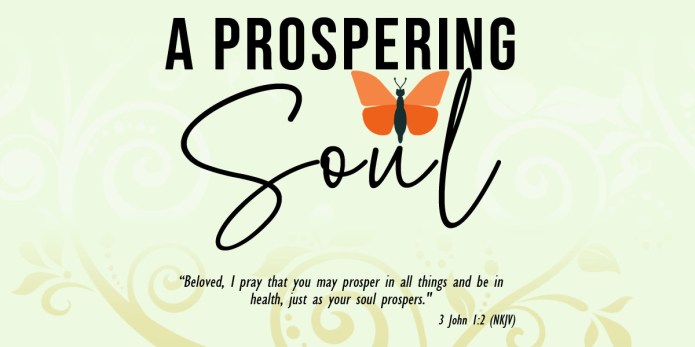
A Prospering Soul – Part 1

Part 1- A Prospering Soul is A Yielded Soul

In 3 John 1:2 (NKJV), the Apostle John prays for Gaius, saying, “Beloved, I pray that you may prosper in all things and be in health, just as your soul prospers.” This is God’s Will for every person. He wants us to prosper in everything we set our hands to do. Contrary to what many have wrongly believed and taught, God doesn’t cause people to become sick and afflicted. This is one of the reasons that Jesus’s ministry is so impactful to us. He was moved with compassion to heal the sick, give sight to the blind, and hearing to the deaf. He performed these wonderful miracles because it was God’s Will for him to do so. Paul’s prayer for Gaius beautifully reflects the Father’s Will for our total wholeness, where our body, soul, and spirit are all aligned with His divine purpose.

1 Thessalonians 5:23 (NLT) helps us grasp this more fully. Paul writes: “Now may the God of peace make you holy in every way, and may your whole spirit and soul and body be kept blameless until our Lord Jesus Christ comes again.” In this verse, our Heavenly Father emphasizes the wholeness of humanity, describing the three parts that make up a person: spirit, soul, and body. Paul mentions these parts separately, and we can’t allow the truth of this to slip by us. He’s signaling that each part must be considered individually, but also in harmony with one another. This is necessary for us to understand and experience true wholeness in the way the Father desires. Paul has made it clear that individually, we each play a huge role in achieving this harmony and balance, because the soul and the body are governed by our free-will.

The Impact of Free-Will Choice

The soul is the part of us that we have control over, and within the soul lies our emotions, our feelings center, our thoughts (the mind), and another crucial component—the human will. It’s important to remember that God will never overstep the gift of free-will that He’s given us. Romans 11:29 (NLT) affirms this: “For God’s gifts and his call can never be withdrawn.” God’s gifts and call are irrevocable. This means He will never take back His call or overstep the gift of free-will He’s provided to every living person.

Essentially, we do what we want to do. There are rules that govern our daily lives, and more importantly, God has generously provided His laws to govern the way we should live as His children. Yet, in just about every aspect of life on earth, we find very creative ways of breaking these laws and requirements, and our Heavenly Father does not prevent us from doing so. Just as He allowed Eve to make the choice to sin when she was deceived by satan, and He allowed Adam to make the choice to sin when he was deceived by Eve, God will allow us to make our own free-will choices and decisions, even when they lead us to sin. We choose whether we will love and obey God or not. He doesn’t force us to live by the Holy Spirit, and He will allow us to go to hell if that’s our choice. Our Heavenly Father is committed to His Word, and therefore; He will not violate our free-will choices.

Before we are born again, we walk by the flesh and engage in works of the flesh. After we give our lives to Christ, in Galatians 5:16, we are instructed make a complete turnaround and “walk by the Spirit.” This is a powerful commandment intended to transform how we live. It is also, at its core, a choice that includes incredible privilege and responsibility. It’s an ongoing, day by day, moment by moment decision to allow God’s presence to shape how we think, feel, speak, and act. It is the way to consistently live victoriously and abundantly. Our Heavenly Father commands us to live this way and helps us through the Holy Spirit that indwells us, but He does not force us to do so.

We must not make the mistake of thinking the indwelling Holy Spirit will take control of our souls and make us yield to God. We must make the free-will choice to yield to Him ourselves. The Holy Spirit will not control our souls unless we surrender them, and most of us do this bit by bit—not in one fell swoop, but little by little.

Our emotions, thoughts, and will must be surrendered to His guidance. Romans 12:1-2 (NIV) tells us, “Therefore, I urge you, brothers and sisters, in view of God’s mercy, to offer your bodies as a living sacrifice, holy and pleasing to God—this is your true and proper worship. Do not conform to the pattern of this world, but be transformed by the renewing of your mind. Then you will be able to test and approve what God’s will is—his good, pleasing and perfect will.” In this passage, our Heavenly Father is lovingly imploring us to do what is best for our souls and surrender our entire existence to Him. Again, He does not force, but gently guides.

Say ‘Yes’ to God

It’s no secret that many of us struggle with releasing certain habits, addictions, obsessions, and phobias to the Lord Jesus Christ. He invites us to leave them at his feet, and never pick them up again, and it is our choice to do so. Everything in life, from the smallest to the greatest detail is spiritual, and sometimes there’s a ‘no’ in our souls that keeps us separated from the victory the Holy Spirit is leading us to.

There are hidden places within our souls that we often avoid confronting. These are areas where we hold back from fully surrendering to God’s Will. To experience true transformation, we must come to a place where we can say “yes” to God even in those deep, unyielded parts of ourselves. Our will must be fully surrendered to God’s Will. This means willingly allowing the light and guidance of the Holy Spirit to bring transformation and alignment with the Will of the Father. This is a soul that is yielded to the Holy Spirit, and when it is, we can truly experience the power and peace that comes from walking in the Spirit. It’s the key to a prospering soul—one that is continually surrendered to God’s transforming work. Pray, invite, and let the Spirit be at work in you.■

Holy Bible, New International Version®, NIV® Copyright ©1973, 1978, 1984, 2011 by Biblica, Inc.® Used by permission. All rights reserved worldwide.

Scripture quotations marked (NLT) are taken from the Holy Bible, New Living Translation, copyright © 1996. Used by permission of Tyndale House Publishers, Inc., Wheaton, Illinois 60189. All rights reserved.

“A Prospering Soul Series: Part 1- A Prospering Soul is A Yielded Soul” written for DomesticAbuseAwareness.Org ©2026. All rights reserved. All done to the glory of God through Jesus Christ, our Lord!
The Journey from Anxiety to Trusting God

Rezi is 43 now, and something peculiar has been happening to her since she was old enough to remember it. During the wee hours of the morning, just before she’s fully conscious, a rush of ideas flashes through her mind. It’s as if her subconscious takes over, flooding her thoughts with flashes of inspiration, new projects, and creative breakthroughs. Sometimes they are so vivid that she can almost see them in full detail. As a child, she became a collector of beautiful and odd things, certain she’d need them as she tried to bring her visions to life.

Over the years, Rezi has tried many things to capture the dreams and visions she receives. Naturally creative, those who know her have been dazzled by her ingenuity and artistic flair. Yet, after her thirties, her enthusiasm began to wane. Like many of us, life has been no joke for her. Her oldest brother, who she loved deeply, was tragically killed in a car accident, and the grief from that loss has cast a long shadow over her life. Her parents were devastated by the loss of their son. They’ve never fully recovered, and the weight of their ongoing ailments has only deepened Rezi’s own sense of helplessness.

In the years that followed, Rezi found herself sinking deeper into anxiety. The idea of losing another loved one, particularly her son or husband, often keeps her up at all hours of the night. She fears she might not ever feel the peace she once knew, worry seems to hang over her like a dark cloud, one that she can’t seem to shake.

The dreams that were once a source of inspiration and wonder, now feel like distant memories. The creative fire that once burned so brightly has become smothered by the weight of her fears and responsibilities. She feels defeated but keeps it hidden from her family. “Let go and let God.” Those are the words she hears reverberating in her head, but in her heart, she doesn’t think she’ll be able to do it. The trust she once had in His peace and guidance seems so far out of reach now.

In 1 Corinthians 13:11 (NLT), the Apostle Paul said: “When I was a child, I spoke and thought and reasoned as a child. But when I grew up, I put away childish things.” Paul was speaking about spiritual maturity. It’s the progression that occurs as we grow in understanding and faith. It’s how our understanding and perspective changes as we grow spiritually. Just as we mature physically and emotionally, our relationship with God calls for spiritual maturity. We move beyond the limited thinking of our younger years and embrace a deeper trust in God’s plan for our lives.

Responsibilities change us in ways we don’t fully comprehend. Life teaches us that we can’t think and reason childishly if we want to keep pace. Our problem is that we abandon those parts of us that keep us humbly seeking God. They keep us from depending on Him with unwavering faith in His love and power.

Jesus Christ said in Matthew 18:3-4 (NLT): “3 Then he said, “I tell you the truth, unless you turn from your sins and become like little children, you will never get into the Kingdom of Heaven. 4 So anyone who becomes as humble as this little child is the greatest in the Kingdom of Heaven.” He calls us to embrace humility and trust in our Heavenly Father in the way a little child humbly trusts their parents. We are to approach God with this same simplicity, openness, and dependence that children naturally have. This level of humility is a conscious choice that you and I must make. It’s in us, and we must choose to allow it to rule our hearts and minds rather than allowing fear and doubt to become a lifestyle.

We can become so disconnected from a sense of wonder and enthusiasm about God and His willingness to bless us that we somehow trust worry over joy and fear over hope. The truth is that only we can make the decision to reverse this for ourselves. We must consciously choose to let God’s love win in our hearts and then choose to walk in that victory every moment of each day. As Paul encourages us in Philippians 4:6-7 (NLT): “Don’t worry about anything; instead, pray about everything. Tell God what you need, and thank him for all he has done. Then you will experience God’s peace, which exceeds anything we can understand. His peace will guard your hearts and minds as you live in Christ Jesus.” By choosing to place our worries in God’s hands, we can embrace the peace that surpasses all understanding and allow it to guide us toward joy and hope.

Romans 8:37 (NLT) tells us: “No, despite all these things, overwhelming victory is ours through Christ, who loved us.” Philippians 4:13 declares that we can do all things through Christ who gives us strength. Putting away childish things means putting away anything that interferes with us being fully persuaded in our privilege and responsibility to trust God with all that we are. We cannot allow ourselves to become slaves to fear and doubt; that is not a mark of the spiritually mature.

Our need to control cannot exceed our requirement to honor God through our faith in Him. True spiritual maturity is found when we move beyond the fears and limitations that once held us back. It’s when we make the choice to trust that God is in control, and He is faithful to care for us. So, we must always remember that His plans for us are greater than anything we can plan for ourselves. We can rest in His safety and walk in peace as we trust His love, His wisdom, and His protection. ■

Scripture quotations marked (NLT) are taken from the Holy Bible, New Living Translation, copyright © 1996. Used by permission of Tyndale House Publishers, Inc., Wheaton, Illinois 60189. All rights reserved.

“The Journey from Anxiety to Trusting God”, Sokie B. for DomesticAbuseAwareness.Org ©2026. All rights reserved. All done to the glory of God through Jesus Christ, our Lord!

When Your Plans Don’t Work Out

Proverbs 19:21 (NLT) tells us, “You can make many plans, but the LORD’s purpose will prevail.” This verse is so plain and straightforward, and most of us have heard it many times. While we know that the Will of God will always prevail in exactly the way that God has planned, feelings of dissatisfaction may cause us to wonder if we really understand this truth. When we’ve carried certain dreams in our hearts for years, and they still seem out of reach, those feelings of regret and frustration can be overwhelming.  It’s especially tough when we get to a point in life where it feels like time is running out, and we wonder if we’ve missed our chance. You’ve spent years trying to put the pieces of life’s puzzle together, but somewhere along the way, it just seems like some of those pieces went missing.

Being frustrated with how our lives have turned out is not uncommon, especially as the years pass. I remembered those feelings when I heard Doris share her feelings about an unfulfilled dream. She just celebrated her 50th birthday and described herself as a woman with a heart full of love. For as long as she can remember, Doris envisioned herself with a family of her own and has dreamed of a husband to share life’s ups and downs. She desperately wanted children to raise, and a home full of love, but somehow, it hasn’t worked out that way. Instead, she finds herself single, with no children, and wondering where things went wrong.

Her life has been full of love and purpose, even if it didn’t unfold in the way she had always imagined. Doris has poured her heart into her nieces and nephews, showering them with affection and support. She’s been there for every milestone, every challenge, and every victory. They count on her and know that she’s always ready to lend a hand and share her wisdom. But even with all this love surrounding her, there’s a quiet, nagging emptiness that she can’t seem to shake. At the end of the day, when the laughter dies down and the house grows still, she’s left wondering if it’s too late for her dreams. She shared—almost reluctantly—that sometimes she wonders if God has forgotten about her, or if maybe her faith just isn’t strong enough.

If you’re like Doris, you’ve probably had a moment where it feels like life just didn’t do you right, and it hurts. It hurts our feelings to have dreams and expectations that don’t turn out how we planned. Maybe you’ve been single longer than you expected, or your career didn’t take off in the way you hoped. Perhaps your health hasn’t improved even though you’re doing everything you know to do. Or, could it be that you’ve missed out on something you deeply desired. You look around and think, Lord, are You still with me? Did I miss something?

You must remember that when it comes to God’s love for you, there are no limitations. He hasn’t forgotten about you. His plans for us are always bigger, better, and far beyond what we could ever dream up on our own. You might not see it now, but He’s working in ways you can’t fully comprehend. As His Word tells us in 1 Corinthians 2:9 (NLT): “No eye has seen, no ear has heard, and no mind has imagined what God has prepared for those who love him.” His plans for you are beyond anything you could ever imagine. You can trust this with your whole heart.

Ephesians 2:10 (NLT) reminds us, “For we are God’s masterpiece. He has created us anew in Christ Jesus, so we can do the good things he planned for us long ago.” There isn’t anything about us that God doesn’t know. Long before we entered our mother’s womb, He knew the exact moment of our births and what we’d be doing this very moment. He knows our next breath, thought, and deed. We can be assured that our Heavenly Father isn’t sitting back, watching us from a distance. He’s with us every moment, and He has woven our story with His purpose and love, even when it doesn’t seem that way to us.

When life doesn’t go according to our plan, disappointment is a real thing. In fact, it’s part of the human experience. If you think about it, even our precious Lord and Savior had moments of sorrow and anguish. He wasn’t exempt from feelings of frustration or hurt. So, it’s okay to feel like things didn’t work out the way you wanted them to, and God doesn’t abandon us when we feel this way. Psalm 34:18 (NLT) says, “The Lord is close to the brokenhearted; he rescues those whose spirits are crushed.” You can be comforted in the truth that God sees your pain, and He is close to the brokenhearted.

Jeremiah 29:11 (NLT) is a verse we hear often, but not nearly often enough. Our Heavenly Father told His people living in Old Testament times: “For I know the plans I have for you,” says the Lord. “They are plans for good and not for disaster, to give you a future and a hope.” He is the same God today that He was then, and He does not change. So, when your plans don’t work out, remember that God’s plans are still in motion. His version of good might look different from yours, but trust that it’s infinitely better.

Doris’s story isn’t over. Neither is yours. There are things you may not see right now—purposeful delays, unexpected detours, and quiet moments where God is shaping your heart to receive His best. The love we pour into others, our devotion to God, and our efforts to live rightly before Him are not in vain. Galatians 6:9 (NLT) encourages us: “So let’s not get tired of doing what is good. At just the right time we will reap a harvest of blessing if we don’t give up.” God will reward our faithfulness. So, hold on to your faith, knowing that there’s still so much ahead. Stay hopeful and watch how God will move powerfully in your life, bringing blessings that exceed your expectations. ■

Scripture quotations marked (NLT) are taken from the Holy Bible, New Living Translation, copyright © 1996. Used by permission of Tyndale House Publishers, Inc., Wheaton, Illinois 60189. All rights reserved.

“When Your Plans Don’t Work Out”, written by Sokie B. for DomesticAbuseAwareness.Org ©2026. All rights reserved. All done to the glory of God through Jesus Christ, our Lord!
Background of a beautiful Wheat field and blue sky with the words of Matthew 9:38 in the foreground.

Becoming the Blessing You Were Meant to Be

Each of us was created for a specific purpose, designed by God to be a blessing in this world. This isn’t a random thing; it was part of God’s plan from the very beginning. Ephesians 2:10 (NLT) says, “For we are God’s masterpiece. He has created us anew in Christ Jesus, so we can do the good things he planned for us long ago.” You were made with intention, and before you even took your first breath, God knew exactly what you were meant to do. This is your divine calling. It’s not just about the things you will accomplish—it’s about becoming the person you were always meant to be, one who reflects God’s love and blessing to those He has ordained to cross your path.

Romans 8:29-30 (NLT) deepens our understanding of this purpose by showing us that we were chosen to become like Christ: “For God knew his people in advance, and he chose them to become like his Son, so that his Son would be the firstborn among many brothers and sisters. And having chosen them, he called them to come to him. And having called them, he gave them right standing with himself. And having given them right standing, he gave them his glory.” This transformation into Christ’s likeness is the heart of our calling. It’s not just about what we do—it’s about who we become. Our purpose is not to live for ourselves but to reflect Christ’s love, compassion, and generosity to those around us. It’s through this transformation that we fulfill the unique role God has for us, bringing His Kingdom to earth through our lives.

The path to the abundance of God’s blessings begins with fulfilling this purpose. Everything God does is in perfect order, and when we align our lives with His Will, we open ourselves to the full range of blessings He has prepared for us. As 1 Corinthians 14:33 (NLT) affirms, “For God is not a God of disorder but of peace, as in all the meetings of God’s holy people.” There is a divine order to our lives, and part of our responsibility as God’s children is to live in accordance with His plan. We may not have all the details right away, and that’s why we’re commanded in His Word to seek Him and His righteousness first. God reveals more about our purpose and the path of success that He’s laid before us as we walk with Him step by step. As we seek Him with all our hearts, He promises that He will reward us. Hebrews 11:6 (NKJV) says, “But without faith it is impossible to please Him, for he who comes to God must believe that He is, and that He is a rewarder of those who diligently seek Him.” Blessings flow continuously as we diligently seek to know God’s Will through His Word.

Along this journey, there are people who are part of your divine calling, people you are destined to influence and bless. Your life is meant to touch others. Galatians 6:9-10 (NLT) encourages us, “So let’s not get tired of doing what is good. At just the right time we will reap a harvest of blessing if we don’t give up. Therefore, whenever we have the opportunity, we should do good to everyone—especially to those in the family of faith.” You were not placed in this world simply to receive—God has positioned you to be a source of blessing, a light to those around you. The acts of kindness, encouragement, and love you offer to others will come back to you in ways you can’t imagine. Our Heavenly Father sets us up to be an overflowing and never-ceasing fountain of giving and receiving His love in multiple ways. Being a blessing causes us to step into and maintain this flow.

When we become born again, something powerful happens: the Holy Spirit comes to dwell within us. This is a life-changing truth. The same Spirit that raised Christ from the dead now lives inside of us, empowering us to do good and to be a blessing. Ephesians 1:3 (NLT) tells us, “All praise to God, the Father of our Lord Jesus Christ, who has blessed us with every spiritual blessing in the heavenly realms because we are united with Christ.” All the spiritual blessings we need are already ours—every ounce of power, love, wisdom, and grace is available to us through the Holy Spirit. But this power is not meant to stay bundled up within. No. It’s meant to flow out. We are to take these blessings and use them to bless others. The more we give of ourselves, the more we grow, the more we experience God’s abundance. As we pour into others, God pours into us.

This is how we create a landing strip for God’s blessings to land in our lives. Think of it as an open space that welcomes the fullness of His favor. Just like a runway where a plane can safely land, our lives become a place where God’s blessings can freely flow. This is what happens when we live according to His Will. When we’re generous with our time, love, and resources, we make room for God to do great things in us and through us, by positioning ourselves in alignment with what He has purposed us to do and who He has purposed us to be.

Blessings will chase us down. As we step into the purpose God has set before us, His provision and favor follow. This is not a promise of a perfect, problem-free life, but it is the assurance that when we live according to God’s Will, His blessings will find us, pursue us, and overtake us. The more we focus on being a blessing to others, the more we find ourselves overwhelmed by God’s goodness. It’s the kind of blessing that we can’t contain, that spills over into every area of our lives.

You were meant to be a blessing. Not just to receive, but to give—to pour out what God has poured into you. This is the divine purpose that you were created for. The more you step into it, the more you will see God’s blessings manifest in your life. Become the blessing you were always meant to be. Your life will not only be changed, but the lives of others will be impacted for God’s Kingdom, and this will bring Him great pleasure. ■

Scripture quotations marked (NLT) are taken from the Holy Bible, New Living Translation, copyright © 1996. Used by permission of Tyndale House Publishers, Inc., Wheaton, Illinois 60189. All rights reserved.

“Becoming the Blessing You Were Meant to Be”, written for DomesticAbuseAwareness.Org ©2026. All rights reserved. All done to the glory of God through Jesus Christ, our Lord!

Healing Doesn’t Always Look Like You Thought

We often pray for healing expecting something neat—something quick, quiet, and painless. We might imagine the pain vanishing overnight and the broken places snapping back together like they never fell apart. But God’s healing rarely follows the script we write. It runs deeper. And sometimes, it brings to the surface things we didn’t even realize we buried.

The process starts when we stop hiding. And that’s a big one. Let’s face it, it’s a lot easier to assume that God is delaying the breakthrough—blessing—restoration—rather than facing that our fears are blocking us from receiving the treasure internally. And make no mistake, internally is where it hits first. All that business about creating a landscape for the blessing to land? That’s real. That’s truth. And we have to be really clear about this.

We can’t heal from what we refuse to acknowledge. It takes courage to sit before God and say, “This still hurts,” or “I thought I was over that, but I’m not.” David got honest with God, and that’s where his healing began. He said in Psalm 32:5 (NLT), “Finally, I confessed all my sins to you and stopped trying to hide my guilt… And you forgave me! All my guilt is gone.” Restoration begins when we stop pretending and start allowing God into the places we’d rather ignore.

The hardest part is unlearning the timelines we gave ourselves. We tell ourselves things like, “I should be past this by now,” or “I can’t still be crying over that.” But God is not bound to our deadlines. His timing is perfect, even when it feels slow. Ecclesiastes 3:11 (NLT) reminds us, “Yet God has made everything beautiful for its own time.” Your healing is not on pause. It’s just unfolding on heaven’s schedule. And even if you don’t see change on the surface, God is still moving in the hidden places.

Real healing touches the soul before it ever reaches the surface. God isn’t only concerned about what happened to you—He’s also healing what happened inside of you. That’s why the healing process can feel so unfamiliar. It’s not just about fixing what’s broken—it’s about becoming who He designed you to be. Psalm 147:3 (NLT) tells us, “He heals the brokenhearted and bandages their wounds.” That’s a promise you can rest in, even when things feel heavy. Even when you don’t feel strong.

And let’s be honest—God’s process can stretch us. We’re often blind to the things we need to see. We think we can continue year after year being the person we’ve always been—handling life the way we’ve always handled it. Recognizing we have to show up differently is no joke. Not only do we have to acknowledge the fear that’s been hiding out in our secret places, we have to confront it.

Our first inclination is to say “Fear? I don’t have it.” The reality is that fear has many forms, and all pain and darkness emanate from it. It’s the thing that doesn’t allow us to have real and lasting peace. It can masquerade as confidence while it burrows deeper into our core. Sometimes it sounds like control. Other times it hides behind a busy life or a smile that’s been rehearsed too well. But underneath the performance is a heart that’s bracing itself—waiting for the next blow, unsure if it can handle another disappointment.

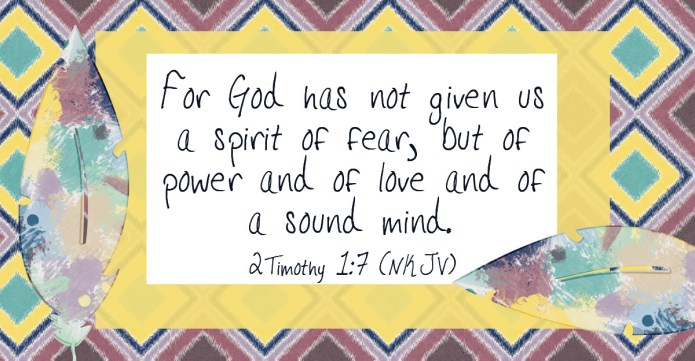
God didn’t call us to live like that. In fact, 2 Timothy 1:7 (NLT) tells us plainly, “For God has not given us a spirit of fear and timidity, but of power, love, and self-discipline.” That means fear doesn’t come from Him. And if it didn’t come from Him, we shouldn’t keep accepting it like it belongs in our story. It doesn’t. And when we see it for what it is, we stop resisting and start repenting—praying—being monumentally grateful that we were once blind but now we see.

It can feel uncomfortable and unfamiliar. But just because it feels strange doesn’t mean it’s not sacred. In fact, the very things you think are detours might be part of the path God is using to set you free. Isaiah 43:19 (NLT) says, “For I am about to do something new. See, I have already begun! Do you not see it?” He’s doing something new in you—even if it’s quiet, even if it’s slow, even if it’s not what you expected.

So give yourself grace. Stop demanding perfection from yourself while you’re in the middle of being transformed. You’re not weak because you’re still healing—you’re brave because you’re still laying bare before Him. God isn’t asking you to have it all together. He’s asking you to trust Him with the pieces. That’s why Paul could write in 2 Corinthians 12:9 (NLT), “Each time he said, ‘My grace is all you need. My power works best in weakness.’” So let His power hold you up when your own strength runs out.

No, healing doesn’t always look like you thought it would. But that doesn’t make it any less holy. Sometimes, the most powerful breakthroughs happen when you feel the weakest. And sometimes, the most beautiful restoration is born out of what felt like the hardest parts of the journey. So keep walking. Keep surrendering. Let God finish what He started in you. Because on the other side of this, you’ll look back and see—He wasn’t just healing you. He was transforming you into who He created you to be in Christ—stronger, full of grace, and free. ■

Scripture quotations marked (NLT) are taken from the Holy Bible, New Living Translation, copyright © 1996. Used by permission of Tyndale House Publishers, Inc., Wheaton, Illinois 60189. All rights reserved.

“Healing Doesn’t Always Look Like You Thought”, written for DomesticAbuseAwareness.Org ©2026. All rights reserved. All done to the glory of God through Jesus Christ, our Lord!

From Shattered to Surrendered

How God Rebuilds What Life Broke

Sometimes life breaks you, and it’s not in a graceful, soft-tears kind of way—but in the real, gut-wrenching way. It leaves you picking up pieces you don’t even recognize anymore. You sit in the ruins of what was, whispering prayers you’re not even sure you believe. But even in the middle of all that pain, God is not far off. He’s not waiting for you to pull it together—He’s close. Psalm 34:18 says, “The Lord is close to the brokenhearted; he rescues those whose spirits are crushed.” That’s not just a comforting thought—it’s a promise. He draws near to us when our hearts are breaking. He steps into the ache, not around it. He doesn’t need your strength to start His healing. He just needs your honesty.

But before the healing comes, there’s usually a fight. We don’t always talk about the wrestling, but it’s real. Wrestling with grief, loss, and unanswered prayers is no joke. When you combine that with the fear that maybe this time things won’t turn around, a deep sadness can set in like a huge stone sinking in your chest.

And sometimes we even wrestle with God—not in rebellion, but in desperation. Jacob did it too. And in that holy struggle, Genesis 32:26 (NLT) tells us he said, “I will not let you go unless you bless me.” That’s what surrender starts to sound like. It’s not passive or polished—its persistent, raw, and real. You can bring your questions, your confusion, your frustration to God. He can handle it. And often, it’s in that tension—when you feel as though you might break into a thousand pieces—that transformation begins.

Letting Go So God Can Build

Eventually, the fight gives way to surrender. Not the kind that feels like giving up—but the kind that feels like finally breathing. Like letting your shoulders drop. Like whispering, “God, I don’t know what’s next, but I trust that You do.” That kind of surrender isn’t weak—it’s wise. It’s what happens when your will finally bows to His love. 1 Peter 5:7 (NLT) says, “Give all your worries and cares to God, for he cares about you.” This isn’t only the cares you’ve already figured out. It’s not just the ones that look “neat enough” for prayer. God wants us to bring all cares to Him, recognizing that there’s nothing He can’t handle.

Surrender sounds like, “I can’t carry this anymore.” But the truth is—we were never supposed to. That’s the holy shift we need to make in mind and heart. It’s going from trying to grip so tightly to control—to letting God take the lead. We go from pushing and striving to finally resting in the hands that shaped us.

We must trust—with everything in us—that our Heavenly Father doesn’t leave surrendered things broken. He rebuilds. He restores. He renews. Not always the way we imagined, but always with purpose. Joel 2:25 says, “I will give you back what you lost to the swarming locusts.” That’s not just restoration—it’s redemption. God specializes in what feels impossible. He rebuilds what life tried to tear apart. But His rebuilding isn’t rushed. It’s sacred. Brick by brick. Moment by moment. Whether it happens in the quiet or through community, His work is always done in love. And the beautiful thing about letting Him rebuild is that He doesn’t just restore what was—He creates something better than you ever knew to ask for. ■

Scripture quotations marked (NLT) are taken from the Holy Bible, New Living Translation, copyright © 1996. Used by permission of Tyndale House Publishers, Inc., Wheaton, Illinois 60189. All rights reserved.

“From Shattered to Surrendered”, written for DomesticAbuseAwareness.Org ©2026. All rights reserved. All done to the glory of God through Jesus Christ, our Lord!

When Life Happens

Hebrews 12:11 (NLT) tells us: “No discipline is enjoyable while it is happening – it’s painful!  But afterward there will be a peaceful harvest of right living for those who are trained in this way.” This verse informs us that God is very much aware that discipline isn’t fun; it can be uncomfortable and even painful. However, the reality is that discipline is a necessary and unavoidable part of the Christian life. During the process, we might be tempted to have a pity party or believe that others have it better and that the grass is greener on the other side. Thinking this way might offer temporary relief, but it will not change the fact that discipline opens the door wide to growth in Christ. It’s crucial that we view it this way.  

God’s discipline might lead us to fall back into old habits and questions like, “What did I do to make God angry with me?” We might revert to attitudes that suggest God is punishing us, but this is not the truth. Regarding God’s unconditional love for us, 1 John 4:18 (NLT) says, “Such love has no fear, because perfect love expels all fear. If we are afraid, it is for fear of punishment, and this shows that we have not fully experienced his perfect love.” God’s love drives out fear, and if we are still afraid, it is due to our worries about punishment. By loving and honoring our Heavenly Father, we can move beyond these fears and trust in His perfect love.

Although we might have witnessed or endured domestic violence and abuse from childhood well into adulthood, that is not a space we should call home. Domestic violence and abuse is not God’s discipline, make no mistake about that. Living in fear is never where God wants us to be. Instead, He wants us to live continually in His love, protection, and care. He doesn’t inflict pain on us. He is a loving Father who disciplines His kids because He cares about us and wants us to lead fulfilling lives. Psalm 103:8-12 (NLT) beautifully expresses this: “8 The LORD is compassionate and merciful, slow to get angry and filled with unfailing love. 9 He will not constantly accuse us, nor remain angry forever. 10 He does not punish us for all our sins; he does not deal harshly with us, as we deserve. 11 For his unfailing love toward those who fear him is as great as the height of the heavens above the earth. 12 He has removed our sins as far from us as the east is from the west.”

1 John 1:5 (NLT) declares, “This is the message we heard from Jesus and now declare to you: God is light, and there is no darkness in him at all.” God doesn’t cause our troubles and tribulations, but through them, He opens our eyes. We may have been walking around with blinders, unable to see the goodness of His faithfulness and promises, or to be guided along the path of our purpose in Christ. We must recognize that through our brokenness and pain, He illuminates the victory that faith in Him will ultimately win for us.

Life happens—we make mistakes, and sometimes things go terribly wrong. Facing these situations is never easy, but it’s often in these challenging moments that God’s light shines the brightest. They offer us a clearer view of the times where we didn’t trust Him as wholeheartedly as we should have. It’s important to understand that domestic violence, abuse, and fear are not signs of divine discipline; they’re just harsh realities that don’t reflect God’s love and Will for us. Our true home is with our Heavenly Father, and when life happens to throw obstacles our way, we can move through them by trusting His sovereignty, grace, and power.

In Isaiah 43:19 (NLT), He said, “For I am about to do something new. See, I have already begun! Do you not see it? I will make a pathway through the wilderness. I will create rivers in the dry wasteland.” Even in the toughest situations, God is at work, creating new paths and refreshing our dry places with His promise of restoration and hope. When we’re in the midst of life’s struggles, it’s easy to feel lost or abandoned. But this verse assures us that God is not only aware of our situation, but He is also creating new possibilities where we see none. Let’s trust Him with all our hearts, minds, and souls. He’s greater than any challenge we face, and if we stay close to Him, He’ll guide us through the wilderness into our eternal home of peace, love, and joy. So, hold firm to this promise, knowing that God’s transformative power is working even in our darkest moments to bring forth a future filled with His abundant grace and blessings. ■

Scripture quotations marked (NLT) are taken from the Holy Bible, New Living Translation, copyright © 1996. Used by permission of Tyndale House Publishers, Inc., Wheaton, Illinois 60189. All rights reserved.

“When Life Happens”, written for DomesticAbuseAwareness.Org ©2025. All rights reserved. All done to the glory of God through Jesus Christ, our Lord!

Living in Unfamiliar Territory

Fear and anxiety can be debilitating human experiences, and our Heavenly Father has given us the remedy in Isaiah 41:10 (NLT): “Don’t be afraid, for I am with you. Don’t be discouraged, for I am your God.  I will strengthen you and help you. I will hold you up with my victorious right hand.” No matter the challenges we face, the presence of God provides a security and peace that surpass our understanding. However, there are many people going through really tough storms in their lives, and they don’t know that they can lean on God. A new friend, Elaine, was in this place not long ago and shared with me the hurtful situation she was dealing with.

Dreaming of having a family since she was a child, Elaine was ecstatic when she discovered she was pregnant with twins. They were her world, and their needs always came first. If you had asked her husband, he’d argue that he was a very distant fourth or fifth on her priority list. After 13 years of complaining about what he considered a loveless marriage, Elaine came home one day after work and saw a note on the bedroom nightstand. It read, “I’m done. You won’t have me around anymore, and maybe you’ll understand how I’ve felt the last 13 years.” She acknowledged that her husband was a good father and provider but admitted that they had stopped seeing each other as man and wife years ago.

Elaine is shocked at how devastating it’s been since he left. It’s rocked her to her core, she said. Her husband took care of everything, and she may have taken this for granted. She acknowledged that she’s never known what it means to totally lean on God as the Source of all blessings. She asked me, “How do I ask God for help?” I suggested she begin by praying openly, and share her fears, confusion, and hopes with Him. I told her that asking for help is about being honest and vulnerable with God. It starts with acknowledging her need for His support and guidance. I reminded her of Philippians 4:6-7 (NLT): “Don’t worry about anything; instead, pray about everything. Tell God what you need, and thank him for all he has done. Then you will experience God’s peace, which exceeds anything we can understand. His peace will guard your hearts and minds as you live in Christ Jesus.”

1 John 4:15 (NLT) tells us, “All who confess that Jesus is the Son of God have God living in them, and they live in God.” Our Heavenly Father is home for us. He’s our Creator, and when we accept the salvation He offers through Jesus Christ, we begin to live in Him. But, when we put children, spouses, family, and friends above God, we lose sight of the One who gave us these blessings. This is the equivalent of living in unfamiliar territory, one that’s outside the realm of God’s Will. Life can quickly become overwhelming when our priorities are out of order in this way.

Jesus tells us in Matthew 6:33 (NLT), “Seek the Kingdom of God above all else, and live righteously, and he will give you everything you need.” This means making God our top priority and trusting Him to take care of everything else. This focus on God helps us keep our lives in balance and ensures that we remain within His guiding presence and purpose.

Understanding that God is all-powerful, all-knowing, and sovereign helps us see that He is unlike anyone or anything else; He’s in a class all by Himself and no one compares. Psalm 115:3 (NLT) says, “Our God is in the heavens, and he does as he wishes.” Acknowledging the truth of His overwhelming brilliance, holiness, and perfection is the starting point for a deep relationship with Him. By keeping Him first in our lives, we align our hearts and minds with His plan, and everything else will fall into its rightful place.

Romans 8:28 (NLT) tells us: “And we know that God causes everything to work together for the good of those who love God and are called according to his purpose for them.” This is God’s promise to us, but it hinges on our faith in Him and our trust in His Word. Elaine experienced firsthand how quickly life can change when our priorities and focus drift from God’s Will. Her situation shows how extremely important prayer and faith are, and how crucial it is to keep God at the head of our lives. When we fully get on board with His purpose, even when the storms are raging and we’re dealing with the most challenging thing we’ve ever encountered, we can find peace in God. We can rest in Him, trusting that He is working everything together for our good, because this is what He promises to do.■

Scripture quotations marked (NLT) are taken from the Holy Bible, New Living Translation, copyright © 1996. Used by permission of Tyndale House Publishers, Inc., Wheaton, Illinois 60189. All rights reserved.

“Living in Unfamiliar Territory”, written for DomesticAbuseAwareness.Org ©2025. All rights reserved. All done to the glory of God through Jesus Christ, our Lord!