Woman looking thoughtfully toward the light beside the words “There is still life ahead of you” and John 10:10 NLT.

When Abuse Gets in the Way of the Life God Intended

The book of Job is one of those places in Scripture where we see just how deeply suffering can affect a person’s life. Job lost his children, his wealth, his health, and almost everything that had given his life a sense of security. At one point he said in Job 3:25 (NLT), “What I always feared has happened to me. What I dreaded has come true.” Imagine living through that much loss and still trying to make sense of your life. When pain keeps coming, it can change the way you think, the way you see yourself, and even what you believe is possible for your future. Abuse can do something very similar. It can get into places that go far beyond what happens in the relationship itself. It can affect your confidence, your peace, your relationships, your decisions, and sometimes even the way you see God. And before long, you can find yourself living around the abuse instead of living the life God intended for you.

Abuse has a way of making your world smaller. You may stop saying what you really think because you already know how it will be received. You may stop doing things you enjoy because they cause an argument. You may begin checking somebody else’s mood before you decide what kind of day you’re going to have. Little by little, you can become more focused on keeping the peace than living your life. And after a while, you may not even realize how much of yourself you’ve given up just trying to avoid the next problem. That isn’t the life God calls you to live. Jesus said in John 10:10 (NLT), “My purpose is to give them a rich and satisfying life.” Abuse takes. Jesus gives. Abuse controls. Jesus leads. Those are two very different things, and we have to learn to recognize the difference.

After you hear the same hurtful messages long enough, they can start sounding like your own thoughts. Maybe you’ve been told that you’re not good enough, that nobody else would want you, that you can’t make it without him, or that everything is your fault. Those words can get deep. But what somebody says about you does not get to decide who you are. Your identity was never supposed to come from another person’s approval in the first place.

Ephesians 2:10 (NLT) says, “For we are God’s masterpiece. He has created us anew in Christ Jesus, so we can do the good things he planned for us long ago.” That means the person God created you to be is still there, even if abuse has buried her under years of hurt, fear, and self-doubt. Jesus is not looking at you through the eyes of the person who hurt you. He sees you through the truth of who you are in Him.Top of Form

Getting free from abuse is about more than getting away from the person who hurt you. There is also an inner freedom that has to happen over time. You have to start separating what God says about you from what you have been told about yourself. That can take some work, especially when you’ve heard the same lies for years. But you don’t have to carry somebody else’s words as if they are your identity. Romans 12:2 (NLT) tells us to “let God transform you into a new person by changing the way you think.” This is where Jesus meets us in the healing. He begins to rebuild what has been torn down. And He doesn’t do it by pretending the hurt never happened, but by teaching us to see ourselves, our lives, and our future through His truth instead of through the eyes of the person who hurt us.

The life God intended for you may not look exactly like the life you once imagined. Abuse may have changed things you never expected to have to deal with. But it does not get the final word. You can heal. You can learn to trust yourself again. You can make decisions without being afraid of somebody else’s reaction. You can laugh again, make plans again, and discover parts of yourself that got buried under the weight of survival. Most of all, you can walk with Jesus through every part of that journey. He is not asking you to pretend it didn’t happen. He is inviting you to let Him meet you in the places where it hurt and lead you forward. What happened to you matters, but it does not have to determine the rest of your life. There is still life ahead of you. ■

Scripture quotations marked (NLT) are taken from the Holy Bible, New Living Translation, copyright © 1996. Used by permission of Tyndale House Publishers, Inc., Wheaton, Illinois 60189. All rights reserved.

“When Abuse Gets in the Way of the Life God Intended”, written for https://DomesticAbuseAwareness.org© 2026. All rights reserved. All praise and honor to God through Jesus Christ, our Lord and Savior.

Looking Forward After What You’ve Been Through

Philippians 3:13–14 (NLT)
“13 No, dear brothers and sisters, I have not achieved it, but I focus on this one thing: Forgetting the past and looking forward to what lies ahead, 14 I press on to reach the end of the race and receive the heavenly prize for which God, through Christ Jesus, is calling us.”

There are some things you go through in life that leave a mark on you. Sometimes it is a relationship that ended badly, a decision you wish you could take back, a season when you felt lost, a disappointment you never saw coming, or simply a period of life that took more out of you than you expected. And if you’ve lived long enough, you already know that life can teach you some lessons you didn’t think you needed to learn. Some of those lessons come through our own choices, and some come through what other people have chosen to do. Either way, when you’ve been through certain things, you don’t always come out thinking the same way you did before.

You may become more cautious. You may question yourself. You may find yourself wondering if you can trust again, love again, hope again, or even believe that something good can happen again. That’s where what you’ve been through can become a problem—not because the experience wasn’t real, but because we can allow something that happened in one season to start telling us what we should expect in every season that follows. We have to be careful with that. What happened to you may explain some of what you struggle with today, but through Jesus Christ, it does not have to keep controlling what happens in you tomorrow—it does not have to keep deciding how you live, love, think, and respond.

Paul understood something about moving forward that we sometimes have a hard time accepting. He had a past. He had things in his history that he could have spent the rest of his life thinking about, explaining, regretting, or trying to make up for. But when Paul talked about his life in Philippians, he didn’t present himself as a man who had forgotten everything behind him. He presented himself as a man who had made a decision about where he was going. He understood that if he kept reaching backward, he would have difficulty reaching forward. That’s a word for us because there is a difference between remembering what happened and continuing to live in it.

You can remember the relationship that hurt you without allowing that relationship to determine whether you will ever trust anybody again. You can remember a mistake without making that mistake your identity. You can acknowledge that somebody mistreated you without spending the rest of your life allowing what they did to shape how you see yourself.

Moving forward doesn’t mean you suddenly forget what happened. It means you stop allowing what happened to have the final word over who you are and what you believe is possible for your life. There comes a point when you have to recognize that God can still do something new in you, even after what you’ve been through. Isaiah 43:18-19 (NLT) reminds us that God is not finished: “But forget all that—it is nothing compared to what I am going to do. For I am about to do something new. See, I have already begun! Do you not see it?”

We can spend so much time mourning the door that closed that we never notice the door God is opening. Sometimes we become so focused on what we lost that we fail to recognize what God is placing before us. A closed door may have disappointed you, but it does not mean God has stopped making a way for you. The Word of God tells us in Revelation 3:8 (NLT), “I know all the things you do, and I have opened a door for you that no one can close.” Your life is not over because something didn’t work out. You are not finished because you made mistakes. You are not disqualified because you have a history. You are not too old, too damaged, too disappointed, or too far behind for God to continue working in your life.

You’ve already lived through yesterday. You don’t have to keep living there. Take the wisdom. Take the lessons. Take the growth and give God the hurt that you are still carrying. Repent where you need to repent. Forgive where you need to forgive. Release what you cannot change. And then look forward. Not because you know exactly what is coming, but because you know the God who holds your future. After all you’ve been through, don’t spend the rest of your life looking backward. God is still working. He is still leading. And there is still more ahead of you. Lift your eyes, trust Him with what comes next, and keep looking forward.

Scripture quotations marked (NLT) are taken from the Holy Bible, New Living Translation, copyright © 1996. Used by permission of Tyndale House Publishers, Inc., Wheaton, Illinois 60189. All rights reserved.

“Looking Forward After What You’ve Been Through”, written for DomesticAbuseAwareness.Org ©2026. All rights reserved. All done to the glory of God through Jesus Christ, our Lord!

When You Feel Invisible, Remember Who Sees You

If you’ve been walking out your front door for the last five years with no one to tell you how gorgeous you look and how important you are, you might be smiling on the outside, but inside—that’s a different story. You’re giving it your all—to your family, your church, your workplace, your friends—but sometimes it feels like no one sees the cost. And now, in this season, that weight is heavy, and sometimes it feels like too much to carry. Underneath it all, you’re exhausted, discouraged, and may be even questioning your own worth. It’s easy to wonder: Does anyone really see me? The answer, beloved, is yes—God sees you completely.

David gives us this intimate reminder in Psalm 139:3 (NLT): “You see me when I travel and when I rest at home. You know everything I do.” The God of the universe is not distant or distracted. He is intimately involved in the details of your life. He sees when you rise early to pray before the house wakes up. He notices your efforts to speak life even when your own heart is breaking, and He knows every lonely tear you’ve shed. Nothing about your journey is hidden from the Almighty. He sees everything, and we can be absolutely confident of this. While others may overlook the quiet sacrifices you make each day, God does not.

You may feel unnoticed, but His love for you isn’t passive—it’s relentless. He’s not just aware of your pain; He’s walking with you through it, delighting in the wonderful blessings He has for you on the other side of that pain. Even during your toughest moments, His heart is drawn to your faithfulness. So, in those times when you’re feeling unappreciated, and the wait seems unbearable, remember that God doesn’t measure your worth by circumstances or conditions. What’s important to Him is your willingness to trust Him, your perseverance to keep going, and your courage to believe that He is working, even when you can’t see it yet.

You might be asking the question that’s on the hearts of many: “How much longer will it be like this?” We want a breakthrough, and we’re pleading for something—anything—to shift. We think to ourselves that change can’t come soon enough. Hoping, praying, holding on as best as we can, yet day after day, we wake up to the same routine, the same weight, and the same ache in our hearts. Here’s what we need to know: there’s a tension between hope and weariness, and this is where many of us are. Our faith is being stretched and our worship is being tested by the enemy. It’s in this place that our trust in God is either weakened or deepened.

Make no mistake, the Father’s eyes are always upon us. He’s watching. He’s also waiting, and it’s in no way because He’s being indifferent. It’s because He’s being faithful toward us and who He created us to be. Philippians 1:6 (NLT) tells us, “And I am certain that God, who began the good work within you, will continue His work until it is finally finished on the day when Christ Jesus returns.” God often does His deepest work in us during the waiting. As our faith is being stretched, our character is being shaped in a way that comfort just can’t mold. He’s not observing your struggle from a distance; He’s near, attentive, and fully aware of every detail of your existence. Sometimes, He waits for us to worship not because everything is right, but because we trust that He’s still God.

Just as we desire to be seen and appreciated, our Heavenly Father does too. And it can’t be inauthentic. From the depth of our souls, our motivation should be such that our gratitude overwhelms Him. He desires to be seen—not with eyes made weary with doubt, but with those that see the truth of His faithfulness, love, mercy, and grace. Isaiah 30:18 (NLT) reminds us, “So the Lord must wait for you to come to him so he can show you his love and compassion. For the Lord is a faithful God. Blessed are those who wait for his help.” God’s waiting is not passive or slack. It’s filled with purpose, love, and a desire to reveal His faithfulness in ways that will leave us changed.

We must be clear—a breakthrough can change our situation, but only a deeper walk with God can change us. All that matters is that God sees us. He loves us beyond what we can imagine, and He knows how to turn our feelings of not being valued or seen into confidence in His unchanging hands. His promise in Deuteronomy 31:8 (NLT) is a balm that comforts our souls: “Do not be afraid or discouraged, for the Lord will personally go ahead of you. He will be with you; he will neither fail you nor abandon you.” God not only sees you—He goes ahead of you. He’s already in tomorrow, preparing strength for the places you feel weak and peace for the storms you can’t predict.

We often carry both cultural and generational expectations to be strong, to endure, to keep pressing no matter how we feel. But strength was never meant to come from us alone. God doesn’t require us to pretend we’re okay when we’re not. He invites us to rest in Him, to cast our burdens on Him, and to be honest in His presence. We need to lean on the truth that we are seen by God. Meditate and feast upon the awesome reality of this truth: God sees you. He will never forget about you, your name, your needs, or your future. So, let’s stop striving to be visible to others and start resting in the assurance that we are known, chosen, and cherished by the One who matters most. ■

Scripture quotations marked (NLT) are taken from the Holy Bible, New Living Translation, copyright © 1996. Used by permission of Tyndale House Publishers, Inc., Wheaton, Illinois 60189. All rights reserved.

When You Feel Invisible, Remember Who Sees You”, written for DomesticAbuseAwareness.Org ©2026. All rights reserved. All done to the glory of God through Jesus Christ, our Lord!

Don’t Let Him Pick You Apart!

I bet just about every woman knows the verse in Philippians 4:6(NLT). It tells us, “Don’t worry about anything; instead, pray about everything. Tell God what you need, and thank him for all he has done.” Look at how lovingly our Heavenly Father gives us a pathway back to peace. He doesn’t leave us guessing. First, He tells us what not to do: don’t worry. Then He tells us exactly what to do: pray, bring our needs before Him, and remember His faithfulness.

Worry has a way of slowly wearing us down. It creeps into our thoughts, steals our confidence, and makes us question what God has already promised. But worry is not who we are. Fear is not our identity. Doubt does not define us. As believers, we are women who have been given faith, strength, and authority through Jesus Christ.

And we have to be careful because the enemy loves to use painful situations to make us turn against ourselves. He wants us to replay every hurt, every mistake, every word spoken against us until we begin to believe the lies. But we can’t let the devil pick us apart. We can’t partner with the very voice that is trying to convince us that we are powerless, broken, or forgotten.

This is especially important for women who have experienced domestic violence and abuse. Many women have spent years hearing words meant to tear them down. They have been criticized, controlled, blamed, and made to feel like they were the problem. Little by little, those wounds can settle deep within the soul if they are not brought before God for healing.

I’ve heard the testimonies of so many women of faith who have walked through some of the darkest seasons imaginable. They have faced abandonment, financial struggles, betrayal, emotional abuse, and physical violence. Some felt like they were being attacked from every direction. Just when they thought one storm was finally passing, another storm appeared. They felt like throwing in the towel, but they didn’t.

One of the common threads in their stories is that they discovered something powerful: anxiety and doubt can steal precious moments that God intended for peace. They spent time worrying about whether God would show up, whether He would make a way, or whether they would be left behind.

His Word reminds us in Isaiah 43:2 (NLT), “When you go through deep waters, I will be with you. When you go through rivers of difficulty, you will not drown. When you walk through the fire of oppression, you will not be burned up; the flames will not consume you.”

God never abandoned them. He never lost sight of them. He walked with them through the valley and brought them into a place of healing, restoration, and renewed strength. He will do the same for you. Their testimonies remind us that every believer will face moments when their faith is tested. We can know God’s promises, and still struggle with fear.

We all know the grips of that sinking feeling. The kind of heaviness that settles so deeply you cannot even explain the depth of it. Your heart feels troubled, your mind feels exhausted, and nothing seems to bring comfort. In those moments, we know God’s healing power. We know His promises. We know He has told us not to worry, yet there are moments when fear still rises within us.

Many women who have experienced abuse know this feeling all too well. After being hurt, controlled, criticized, or made to feel powerless, fear can become a familiar companion. Even when friends, loved ones, and spiritual mentors remind us to give it to Jesus, we may find ourselves surrendering our burdens one moment and picking them back up the next. But this is where God begins His healing work within us. He is not asking us to pretend we were never hurt. He is teaching us that our pain does not have to determine who we become. He is showing us that the things that happened to us do not have the authority to define who we are.

As God’s children, we can learn something powerful by looking at the love we have for our own children. Many of us would do everything within our power to protect our children, provide for them, and help them through difficult seasons. That love did not originate with us. God placed that capacity to love within us because we were created in His image.

And if we, as imperfect parents, know how to love our children, how much greater is the love of our Heavenly Father? God’s love is higher, deeper, and more complete than anything we could ever give. Isaiah 55:8–9 reminds us that His thoughts and ways are higher than ours. He sees what we cannot see. He knows what we do not know. And even when we feel forgotten, He has never lost sight of us.

Fear is one of the enemy’s greatest tools because it tries to convince us that something is true simply because it feels real. Fear says, “You will never recover.” Fear says, “You will always be broken.” Fear says, “God will not come through for you.”

But fear is a liar.

We cannot allow the enemy to continue picking us apart with thoughts that contradict what God has spoken over our lives. Instead, we must learn to bring those thoughts before God and replace them with His truth. Yes, learning to choose faith over fear takes time. Healing takes time. Trust takes time. But God has given us a pathway forward. His Word tells us in Philippians 4:6-8 to remember His goodness, to thank Him for what He has done, and to fix our thoughts on what is true, honorable, right, pure, lovely, and admirable.

This is how we begin to rebuild what was damaged. This is how we strengthen our faith. This is how we stop allowing fear to have the final word.

The enemy may have tried to pick you apart, but God is in the business of putting you back together.

If someone has spent years trying to convince you that you are not enough, remember this: their words do not have the authority to define you. God’s Word does. You are loved. You are seen. You are valuable. You are a daughter of the King.

Don’t let him pick you apart. Don’t let his words determine how you see yourself. Don’t let the pain of what happened to you become stronger than the truth of who God says you are.

Give those broken places to the One who knows how to restore. The same God who carried you through yesterday will strengthen you for today and prepare you for tomorrow.  ■

Scripture quotations marked (NLT) are taken from the Holy Bible, New Living Translation, copyright © 1996. Used by permission of Tyndale House Publishers, Inc., Wheaton, Illinois 60189. All rights reserved.

Don’t Let Him Pick You Apart!”, written for DomesticAbuseAwareness.Org ©2026. All rights reserved. All done to the glory of God through Jesus Christ, our Lord!

Are You as Open to God’s Blessings as You Should Be?

Cynthia is 47 and has been a full-time Gospel singer since graduating college with a degree in music arts. Music has always been her world, and she’s genuinely grateful for a career she’s thoroughly enjoyed. She’s met nearly all of her favorite Gospel artists, even shared stages and green rooms with many of them. But now, Cynthia finds herself at a crossroads.

Doctors have advised her to give her vocal cords a serious rest. Physically, she’s tired. Twenty-five years on the road have taken a toll, and although she’s met some amazing people along the way, she’s lonely. The distance and constant travel have made it hard to sustain relationships. None of them have lasted long, and for the past six years, she’s only dated occasionally—with no real commitments.

Recently, an old high school classmate reached out through social media. Back then, he was the class nerd—quiet, awkward, but smart as a whip. What Cynthia never knew was that he secretly fell for her the first time he heard her sing in the seventh-grade choir. He’s always carried a soft spot for her in his heart, but she never noticed him. Like her, he never married, but life kept him busy—he’s now a vice president at a tech company, active in his church, and well-respected in his community.

After exchanging a few messages, he invited her to an event his church was sponsoring. Cynthia declined—politely—but dismissed him almost as quickly as she did back in high school. He wasn’t her type. Not a musician, not a singer, not a choir director. Just a good, available, honorable, saved man… but still, not her type.

Cynthia didn’t think twice about turning him down. In her mind, God’s best for her would come wrapped in a package she was familiar with—someone who shared her musical passion and lifestyle. But what if God was trying to give her something new? Something stable, real, and rooted in the kind of love that grows deep, not just wide?

Sometimes we pray for blessings, ask for companionship, even cry out for something meaningful—but when it shows up in a way we’re not used to, we brush it off. It doesn’t look how we thought it would. It doesn’t fit our type. But the truth is, our “type” isn’t always God’s Will.

Proverbs 16:25 (NLT) says, “There is a path before each person that seems right, but it ends in death.” That may sound a bit dramatic, but it speaks to how when our preferences are unchecked, they can blind us to God’s direction. We lean on what we’re used to instead of leaning into what He’s doing.

Cynthia’s story isn’t about settling. Some of us might think so, but there’s no such thing as settling when it comes to God’s Will. He’s the One with the plan for our lives, and He knows exactly what He’s doing. He only wants what is best for us. So, it’s about being open. Open to the possibility that God knows what she needs in this next chapter of her life more than she does. Maybe the blessing she’s been waiting for isn’t coming through a microphone or a tour bus, but through a conversation with someone she once overlooked.

Ephesians 3:20 (NLT) reminds us that God “is able, through his mighty power at work within us, to accomplish infinitely more than we might ask or think.” That includes healing our hearts, restoring our strength, and sending blessings we didn’t even know we needed.

When the prophet Samuel went to anoint the next king of Israel, he was certain he’d recognize the right one based on looks, stature, and presence. But 1 Samuel 16:7(NLT) tells us that God corrected him, saying, “People judge by outward appearance, but the Lord looks at the heart.” That moment wasn’t just about choosing a king—it was about showing all of us how easily we can misread what God is doing because we’re focused on the surface.

Cynthia, like many of us, had a checklist. Years of living in a specific lane had shaped her expectations. She imagined the man who would come alongside her life would carry a microphone, know his way around a choir stand, and understand the rhythm of Gospel ministry. But God might be writing a new melody—one with a slower tempo, grounded in peace, companionship, and purpose outside of performance.

What if this man from her past—faithful, consistent, and grounded in the Word—wasn’t a detour, but a divine appointment? When we cling too tightly to our preferences, we risk overlooking God’s provision. His blessings don’t always come in the wrapping we expect, but they always come with His signature—peace, goodness, and fruit that lasts.

So the question becomes personal: Are you as open to God’s blessings as you should be? Have you shut the door on something—or someone—because it didn’t look like what you had in mind? Could it be that God is presenting you with a new chapter that requires you to trust Him more than your instincts? It’s easy to pray for favor, but it can’t be filtered through our preferences; it doesn’t work that way. Psalm 84:11 (NLT) says, “For the Lord God is our sun and our shield. He gives us grace and glory. The Lord will withhold no good thing from those who do what is right.” If He’s not withholding it, don’t put yourself in a position of resisting it. Let go and let God. ■

Scripture quotations marked (NLT) are taken from the Holy Bible, New Living Translation, copyright © 1996. Used by permission of Tyndale House Publishers, Inc., Wheaton, Illinois 60189. All rights reserved.

“Are You as Open to God’s Blessings as You Should Be?”, written for DomesticAbuseAwareness.Org ©2026. All rights reserved. All done to the glory of God through Jesus Christ, our Lord!

When You Just Can’t Take Anymore

Everyone has a breaking point, and when we’re pushed to the limit, everything just feels overwhelming. We become emotionally exhausted and may find ourselves thinking, “I just can’t take anymore.” It all feels like too much to bear, and as much as we want to be strong, standing solidly in faith, we’re so emotionally exhausted that we don’t think we can even connect to it anymore. Whether it’s dealing with loss, disappointment, heartbreak, or the overwhelming demands of life, we can’t stop thinking that we’re at the edge, and our reservoir of strength feels depleted.

How do you bounce back from this? Well, the one gift we must give ourselves is to remember that, with the Lord, it’s entirely possible to bounce back—to be rescued from the edge by His mighty hand. God promises us something powerful in times of emotional exhaustion: He is our strength when we have none left. In Isaiah 41:10 (NLT), He says, “Don’t be afraid, for I am with you. Don’t be discouraged, for I am your God. I will strengthen you and help you. I will hold you up with my victorious right hand.” When we’re at that breaking point and feel as though we’re going to shatter into pieces, this is exactly where God wants us to turn to Him. It’s where His strength can shine the brightest, and where we can truly experience His sustaining power. The Apostle Paul said in 2 Corinthians 12:9 (NLT): “But he said to me, ‘My grace is all you need. My power works best in weakness.’ So now I am glad to boast about my weaknesses, so that the power of Christ can work through me.” This reminds us of God’s amazing grace, and His willingness to use His power on our behalf.

Am I Humbling Myself?

Sometimes, when life becomes unbearable, our first instinct is to fight against whatever is coming at us. We might think we can stand strong in our own strength, but life has a way of teaching us that this simply isn’t true. God calls us to humble ourselves in the midst of our struggles. We must bow to His sovereignty, power, and strength, recognizing that we can’t do this alone. James 4:10 (NLT) tells us, “Humble yourselves before the Lord, and he will lift you up in honor.” Our Heavenly Father invites us to release control and let Him work things out of us. Humbling ourselves means admitting that we don’t have all the answers and that we need Him to guide us through the storm. When we surrender our will for His Will, God promises to lift us up.

Am I Willing to Let Go and Let God?

When broken pieces fall to the ground, our tendency is to want desperately to pick them up and put them back together. Our burdens are heavy on us, but we’ve convinced ourselves that if we can’t fix it, things won’t come together the way we think they should. We cling to the struggle instead of clinging to the One who holds our tomorrows—who can fix any issue or problem perfectly. In God’s Word, He invites us to release our worries into His capable hands. 1 Peter 5:7 (NLT) encourages, “Give all your worries and cares to God, for he cares about you.” This is not just a suggestion—it’s a call to trust that God will handle what we cannot.

Letting go doesn’t mean giving up—it means trusting that God’s plans for us are greater than anything we could put together ourselves. It means letting go and letting God–surrendering our anxiety and worries and allowing Him to take full control. This is where true peace begins. Philippians 4:6-7 (NLT) tells us: “Don’t worry about anything; instead, pray about everything. Tell God what you need, and thank him for all he has done. Then you will experience God’s peace, which exceeds anything we can understand. His peace will guard your hearts and minds as you live in Christ Jesus.”

Can I Patiently Endure?

As God’s children, all of us have what it takes to patiently endure. The question is whether we will trust God through to the end. He deserves this level of trust from us, and we are never disappointed when we have faith in Him. Yes, in the middle of our struggles, patience can seem like an impossible task. We want relief right now, but God often calls us to wait and trust in His timing. Romans 12:12 (NLT) teaches us to “Rejoice in our confident hope. Be patient in trouble, and keep on praying.” Patience isn’t about passive waiting—it’s about actively trusting God’s process while we endure the challenges that come our way.

Endurance is part of the Christian journey. James 1:2-4 (NLT) says, “Dear brothers and sisters, when troubles of any kind come your way, consider it an opportunity for great joy. For you know that when your faith is tested, your endurance has a chance to grow. So let it grow, for when your endurance is fully developed, you will be perfect and complete, needing nothing.” Our character and faith are strengthened through this testing.  So, when you feel like you’re about to break, remember that God is doing something powerful in you through your patience.

Will I Trust the Victory Christ Won for Me?

When we’re overwhelmed, it’s easy to forget the victory Christ has already won for us. The challenges we face might seem insurmountable, but Romans 8:37 (NLT) reminds us, “No, despite all these things, overwhelming victory is ours through Christ, who loved us.” Christ has already conquered sin, death, and every power that would seek to defeat us. The victory is already won—it is a finished work. When we remember this, it helps us to press on, knowing that even in our weakest moments, his victory covers us. We are more than conquerors, not because of our own strength, but because of his finished work on the cross.

At some point, life is going to throw all of us for a loop. It’s going to rock us to our cores, to the point where we finally understand that God is in control, not us. When life pushes us to the edge, He is faithful to deliver us. God offers us hope and strength. And it’s not a surface level, temporary solution that He offers us; it’s the fullness of deliverance and restoration He bestows upon us. We don’t have to give up. With humility, trust, patience, and faith in Christ’s victory, we can make it through. As we lean on His promises, we can endure, knowing that He is holding us up with His victorious right hand. You are not alone in your struggle, and you do not have to carry the weight on your own. God is with you, and through Him, you can overcome.■

Scripture quotations marked (NLT) are taken from the Holy Bible, New Living Translation, copyright © 1996. Used by permission of Tyndale House Publishers, Inc., Wheaton, Illinois 60189. All rights reserved.

“When You Just Can’t Take Anymore”, written for DomesticAbuseAwareness.Org ©2026. All rights reserved. All done to the glory of God through Jesus Christ, our Lord!

A Prospering Soul – Part 2

Part 2- The Blockers of Idolatry, Love of Money, and People Worship

Abraham, the father of faith, emerged in the ancient times of the Old Testament. This was a pivotal period because God established His covenantal relationship with His people. Abraham’s record marks a crucial turning point in biblical history. God chose him to be the father of a great nation that would eventually bring forth the Messiah, our beloved Savior, Jesus Christ. The most defining characteristic that is so meaningful to believers is the longing of Abraham’s heart for a son. For years, he dreamed of having a son who would carry on his name and legacy. As the years passed and Abraham grew older, he was convinced all hope was lost. He was well beyond his prime, and so was his wife, Sarah. The dream of fathering a child seemed to slip further from their reach.

God Always Has a Plan

Abraham didn’t know it, but God had an awesome plan for his life. Genesis 12:1-2 (NLT) tells us: “The Lord had said to Abram, “Leave your native country, your relatives, and your father’s family, and go to the land that I will show you. I will make you into a great nation. I will bless you and make you famous, and you will be a blessing to others.” God promised Abraham that he would be the father of a great nation when Abraham was 75 years old. It’s important for us to note the significant lapse of time between the promise and its fulfillment. It wasn’t until 25 years later, when Abraham was 100 and his wife Sarah was 90, that they would see the birth of their son, Isaac.

This long waiting period wasn’t all fun and games. The depth of Abraham’s faith took time to cultivate. Wait mode can be taxing on the soul, and for Abraham, it was marked by doubt, fear, pain, and moments of questioning. These often come to the surface when we’re waiting on a blessing to manifest. When they do, we must not disregard these heavies, but confront and overcome them. This is often what makes the delay necessary. During those 25 years, Abraham had to deepen his trust and reliance on the One who had made the promise. Those years of waiting were not wasted; they were a time of refining, testing, and growing Abraham’s faith to the point where he could finally see that nothing, not even his own limitations or the passing of time, could hinder God’s Will.

The First Step: Separation from Idolatry

Genesis 12:1 tells us that God called Abraham to leave his native country, his relatives, and his father’s family. This was the first step of Abraham’s journey toward fulfilling his divine purpose. It began with this crucial step of separation. In the culture of Abraham’s time, fathers were central to the family unit and held all the authority. Their influence shaped not only the household but also the community and spiritual life. To leave his father and his father’s family was no small thing; it meant detaching from everything that Abraham had known and trusted.

We should try to put ourselves in his shoes; being surrounded by siblings and relatives, living comfortably with them, and enjoying their support for much of his life. Abraham was not a young man when God called him, but in his senior years. So, he was immersed, as was the culture then, in the close bonds of a community of family and friends. Imagine how daunting it would be to leave it all behind. There’s no doubt that this tapestry of loved ones was central to his identity, as it is for us in some respect. Yet, Abraham was obedient to God’s request.

Abraham’s father, Terah, was an idolater. In Joshua 24:2 (NLT), it states, “Long ago your ancestors, including Terah, the father of Abraham and Nahor, lived beyond the Euphrates River and worshiped other gods.” This sets the stage for understanding the environment in which Abraham grew up. His community was steeped in idolatry, and though the Bible doesn’t explicitly detail how deeply Abraham’s father’s idolatry affected him, we can imagine that it shaped much of his early life and understanding of the world. Idols, whether they are made of stone, wood, or false ideas, are powerful influences on the mind, heart, and behavior of people. They lead people to turn their backs on God and His Will. The constant exposure to this must have subtly affected Abraham’s thoughts, desires, and decisions in some way.

For Abraham to step into the fullness of God’s promise, there had to be a clear break from that idolatrous influence. We have to know that the Lord’s command to “leave your native country, your relatives, and your father’s family” wasn’t just about geography; it was about separation from the spiritual and cultural influences that would hinder Abraham from fulfilling his divine calling. Idolatry, in all its forms, is an enemy to the prospering soul. It draws people’s attention away from the one true living God and places it on temporary, powerless things; this is a dark and deadly way to live. God, in His infinite wisdom, knew that for Abraham to truly walk in faith and receive His promise, he needed to step away from the old ways, the old patterns, and the old allegiances that had been established in his family.

Its Influence on the Heart

A prospering soul is required for us to fulfill our purpose, become the person God has destined us to be, and to receive all that He has in store for our lives. But we have to recognize that the soul’s prosperity can be hindered by strongholds of sin and toxic patterns. Among the most insidious blockers to a thriving soul are idolatry, the love of money, and the worship of people. The fruition of the promise came to Abraham when his mind, heart, and soul were no longer hindered by doubt and darkness. This is the case with us as well. When we place anything—whether it’s material wealth, the approval of others, or even ourselves—above God, we set up false idols that rob us of peace, joy, and the intimacy in our relationship with Heavenly Father that He requires and deserves.

Idolatry is anything we place above God in our hearts, whether consciously or unconsciously. It’s not just about bowing to statues or worshiping false gods—it’s about what we prioritize, trust, and depend on more than Him. Money, success, relationships, status, or even our own desires can become idols when they take the throne that belongs to God alone. 1 John 5:21 (NLT) warns us: “Dear children, keep away from anything that might take God’s place in your hearts.” Idolatry isn’t just about misplaced priorities—it deeply affects the condition of our hearts. When we allow something other than God to take center stage, it reshapes the way we think, feel, and respond to Him. Over time, idolatry hardens our hearts, making us less sensitive to God’s voice and more attached to what we crave.

The danger of idolatry is that it creates a divided heart. Instead of fully loving and trusting God, we become torn and fragmented. One part of us still desires Him, but another part is consumed with something else. This inner conflict makes it harder to surrender to His Will. When we idolize money, our hearts grow anxious and restless, constantly striving for more. When we idolize relationships, our hearts become dependent on people for validation and security, rather than resting in God’s love. When we idolize success, our hearts become full of pride. We start to measure our worth by achievements rather than by God’s grace. This sets us up for disaster.

Jesus Christ said in John 4:24 (NLT): “For God is Spirit, so those who worship him must worship in spirit and in truth.” Idolatry corrodes the heart in a way that disconnects it from worshipping God in spirit and truth. It blinds the heart, distorts our perception, and makes us justify the compromises we’ve made against our faith. We convince ourselves that our desires are harmless, even when they are pulling us away from God. The more we chase after these things, the less room we leave for His presence.

God desires undivided devotion because He knows that anything we elevate above Him will ultimately leave us empty. The only cure for an idolatrous heart is to return to Him in full surrender. When we let go of the things we’ve clung to and allow God to take His rightful place, our hearts find the peace, joy, and fulfillment they were created for. ■

Scripture quotations marked (NLT) are taken from the Holy Bible, New Living Translation, copyright © 1996. Used by permission of Tyndale House Publishers, Inc., Wheaton, Illinois 60189. All rights reserved.

“A Prospering Soul-Part 2: The Blockers of Idolatry, Love of Money, and People Worship”, written for DomesticAbuseAwareness.Org ©2026. All rights reserved. All done to the glory of God through Jesus Christ, our Lord!

A Prospering Soul – Part 1

Part 1- A Prospering Soul is A Yielded Soul

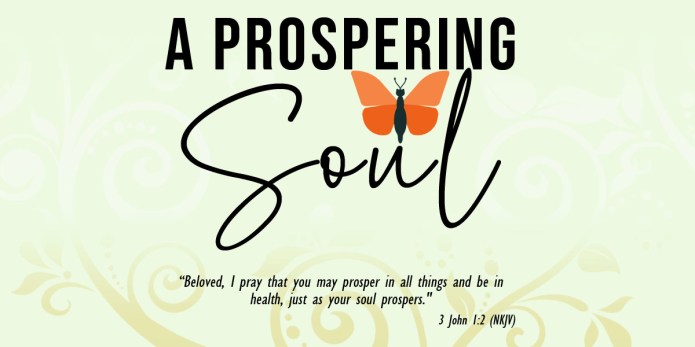
In 3 John 1:2 (NKJV), the Apostle John prays for Gaius, saying, “Beloved, I pray that you may prosper in all things and be in health, just as your soul prospers.” This is God’s Will for every person. He wants us to prosper in everything we set our hands to do. Contrary to what many have wrongly believed and taught, God doesn’t cause people to become sick and afflicted. This is one of the reasons that Jesus’s ministry is so impactful to us. He was moved with compassion to heal the sick, give sight to the blind, and hearing to the deaf. He performed these wonderful miracles because it was God’s Will for him to do so. Paul’s prayer for Gaius beautifully reflects the Father’s Will for our total wholeness, where our body, soul, and spirit are all aligned with His divine purpose.

1 Thessalonians 5:23 (NLT) helps us grasp this more fully. Paul writes: “Now may the God of peace make you holy in every way, and may your whole spirit and soul and body be kept blameless until our Lord Jesus Christ comes again.” In this verse, our Heavenly Father emphasizes the wholeness of humanity, describing the three parts that make up a person: spirit, soul, and body. Paul mentions these parts separately, and we can’t allow the truth of this to slip by us. He’s signaling that each part must be considered individually, but also in harmony with one another. This is necessary for us to understand and experience true wholeness in the way the Father desires. Paul has made it clear that individually, we each play a huge role in achieving this harmony and balance, because the soul and the body are governed by our free-will.

The Impact of Free-Will Choice

The soul is the part of us that we have control over, and within the soul lies our emotions, our feelings center, our thoughts (the mind), and another crucial component—the human will. It’s important to remember that God will never overstep the gift of free-will that He’s given us. Romans 11:29 (NLT) affirms this: “For God’s gifts and his call can never be withdrawn.” God’s gifts and call are irrevocable. This means He will never take back His call or overstep the gift of free-will He’s provided to every living person.

Essentially, we do what we want to do. There are rules that govern our daily lives, and more importantly, God has generously provided His laws to govern the way we should live as His children. Yet, in just about every aspect of life on earth, we find very creative ways of breaking these laws and requirements, and our Heavenly Father does not prevent us from doing so. Just as He allowed Eve to make the choice to sin when she was deceived by satan, and He allowed Adam to make the choice to sin when he was deceived by Eve, God will allow us to make our own free-will choices and decisions, even when they lead us to sin. We choose whether we will love and obey God or not. He doesn’t force us to live by the Holy Spirit, and He will allow us to go to hell if that’s our choice. Our Heavenly Father is committed to His Word, and therefore; He will not violate our free-will choices.

Before we are born again, we walk by the flesh and engage in works of the flesh. After we give our lives to Christ, in Galatians 5:16, we are instructed make a complete turnaround and “walk by the Spirit.” This is a powerful commandment intended to transform how we live. It is also, at its core, a choice that includes incredible privilege and responsibility. It’s an ongoing, day by day, moment by moment decision to allow God’s presence to shape how we think, feel, speak, and act. It is the way to consistently live victoriously and abundantly. Our Heavenly Father commands us to live this way and helps us through the Holy Spirit that indwells us, but He does not force us to do so.

We must not make the mistake of thinking the indwelling Holy Spirit will take control of our souls and make us yield to God. We must make the free-will choice to yield to Him ourselves. The Holy Spirit will not control our souls unless we surrender them, and most of us do this bit by bit—not in one fell swoop, but little by little.

Our emotions, thoughts, and will must be surrendered to His guidance. Romans 12:1-2 (NIV) tells us, “Therefore, I urge you, brothers and sisters, in view of God’s mercy, to offer your bodies as a living sacrifice, holy and pleasing to God—this is your true and proper worship. Do not conform to the pattern of this world, but be transformed by the renewing of your mind. Then you will be able to test and approve what God’s will is—his good, pleasing and perfect will.” In this passage, our Heavenly Father is lovingly imploring us to do what is best for our souls and surrender our entire existence to Him. Again, He does not force, but gently guides.

Say ‘Yes’ to God

It’s no secret that many of us struggle with releasing certain habits, addictions, obsessions, and phobias to the Lord Jesus Christ. He invites us to leave them at his feet, and never pick them up again, and it is our choice to do so. Everything in life, from the smallest to the greatest detail is spiritual, and sometimes there’s a ‘no’ in our souls that keeps us separated from the victory the Holy Spirit is leading us to.

There are hidden places within our souls that we often avoid confronting. These are areas where we hold back from fully surrendering to God’s Will. To experience true transformation, we must come to a place where we can say “yes” to God even in those deep, unyielded parts of ourselves. Our will must be fully surrendered to God’s Will. This means willingly allowing the light and guidance of the Holy Spirit to bring transformation and alignment with the Will of the Father. This is a soul that is yielded to the Holy Spirit, and when it is, we can truly experience the power and peace that comes from walking in the Spirit. It’s the key to a prospering soul—one that is continually surrendered to God’s transforming work. Pray, invite, and let the Spirit be at work in you.■

Holy Bible, New International Version®, NIV® Copyright ©1973, 1978, 1984, 2011 by Biblica, Inc.® Used by permission. All rights reserved worldwide.

Scripture quotations marked (NLT) are taken from the Holy Bible, New Living Translation, copyright © 1996. Used by permission of Tyndale House Publishers, Inc., Wheaton, Illinois 60189. All rights reserved.

“A Prospering Soul Series: Part 1- A Prospering Soul is A Yielded Soul” written for DomesticAbuseAwareness.Org ©2026. All rights reserved. All done to the glory of God through Jesus Christ, our Lord!

The Journey from Anxiety to Trusting God

Rezi is 43 now, and something peculiar has been happening to her since she was old enough to remember it. During the wee hours of the morning, just before she’s fully conscious, a rush of ideas flashes through her mind. It’s as if her subconscious takes over, flooding her thoughts with flashes of inspiration, new projects, and creative breakthroughs. Sometimes they are so vivid that she can almost see them in full detail. As a child, she became a collector of beautiful and odd things, certain she’d need them as she tried to bring her visions to life.

Over the years, Rezi has tried many things to capture the dreams and visions she receives. Naturally creative, those who know her have been dazzled by her ingenuity and artistic flair. Yet, after her thirties, her enthusiasm began to wane. Like many of us, life has been no joke for her. Her oldest brother, who she loved deeply, was tragically killed in a car accident, and the grief from that loss has cast a long shadow over her life. Her parents were devastated by the loss of their son. They’ve never fully recovered, and the weight of their ongoing ailments has only deepened Rezi’s own sense of helplessness.

In the years that followed, Rezi found herself sinking deeper into anxiety. The idea of losing another loved one, particularly her son or husband, often keeps her up at all hours of the night. She fears she might not ever feel the peace she once knew, worry seems to hang over her like a dark cloud, one that she can’t seem to shake.

The dreams that were once a source of inspiration and wonder, now feel like distant memories. The creative fire that once burned so brightly has become smothered by the weight of her fears and responsibilities. She feels defeated but keeps it hidden from her family. “Let go and let God.” Those are the words she hears reverberating in her head, but in her heart, she doesn’t think she’ll be able to do it. The trust she once had in His peace and guidance seems so far out of reach now.

In 1 Corinthians 13:11 (NLT), the Apostle Paul said: “When I was a child, I spoke and thought and reasoned as a child. But when I grew up, I put away childish things.” Paul was speaking about spiritual maturity. It’s the progression that occurs as we grow in understanding and faith. It’s how our understanding and perspective changes as we grow spiritually. Just as we mature physically and emotionally, our relationship with God calls for spiritual maturity. We move beyond the limited thinking of our younger years and embrace a deeper trust in God’s plan for our lives.

Responsibilities change us in ways we don’t fully comprehend. Life teaches us that we can’t think and reason childishly if we want to keep pace. Our problem is that we abandon those parts of us that keep us humbly seeking God. They keep us from depending on Him with unwavering faith in His love and power.

Jesus Christ said in Matthew 18:3-4 (NLT): “3 Then he said, “I tell you the truth, unless you turn from your sins and become like little children, you will never get into the Kingdom of Heaven. 4 So anyone who becomes as humble as this little child is the greatest in the Kingdom of Heaven.” He calls us to embrace humility and trust in our Heavenly Father in the way a little child humbly trusts their parents. We are to approach God with this same simplicity, openness, and dependence that children naturally have. This level of humility is a conscious choice that you and I must make. It’s in us, and we must choose to allow it to rule our hearts and minds rather than allowing fear and doubt to become a lifestyle.

We can become so disconnected from a sense of wonder and enthusiasm about God and His willingness to bless us that we somehow trust worry over joy and fear over hope. The truth is that only we can make the decision to reverse this for ourselves. We must consciously choose to let God’s love win in our hearts and then choose to walk in that victory every moment of each day. As Paul encourages us in Philippians 4:6-7 (NLT): “Don’t worry about anything; instead, pray about everything. Tell God what you need, and thank him for all he has done. Then you will experience God’s peace, which exceeds anything we can understand. His peace will guard your hearts and minds as you live in Christ Jesus.” By choosing to place our worries in God’s hands, we can embrace the peace that surpasses all understanding and allow it to guide us toward joy and hope.

Romans 8:37 (NLT) tells us: “No, despite all these things, overwhelming victory is ours through Christ, who loved us.” Philippians 4:13 declares that we can do all things through Christ who gives us strength. Putting away childish things means putting away anything that interferes with us being fully persuaded in our privilege and responsibility to trust God with all that we are. We cannot allow ourselves to become slaves to fear and doubt; that is not a mark of the spiritually mature.

Our need to control cannot exceed our requirement to honor God through our faith in Him. True spiritual maturity is found when we move beyond the fears and limitations that once held us back. It’s when we make the choice to trust that God is in control, and He is faithful to care for us. So, we must always remember that His plans for us are greater than anything we can plan for ourselves. We can rest in His safety and walk in peace as we trust His love, His wisdom, and His protection. ■

Scripture quotations marked (NLT) are taken from the Holy Bible, New Living Translation, copyright © 1996. Used by permission of Tyndale House Publishers, Inc., Wheaton, Illinois 60189. All rights reserved.

“The Journey from Anxiety to Trusting God”, Sokie B. for DomesticAbuseAwareness.Org ©2026. All rights reserved. All done to the glory of God through Jesus Christ, our Lord!

When It’s Time to Make A Shift

Dissatisfaction is that feeling of frustration or unhappiness that hits when our expectations, desires, or needs aren’t being met. It can show up in different areas of our lives—whether it’s personal experiences, work, or relationships. When it comes to the manifestation of blessings we’ve been waiting to receive, emotionally, this is where many of us are right now. We might be stuck in this space between where we thought we’d be and where we actually are. And in this space, it’s easy to get discouraged or even question ourselves, but we shouldn’t let that deter us. Instead, we should remind ourselves that dissatisfaction can be a great motivator. It can push us to reevaluate what we’re doing and how we’re doing it. It can help us make room for the blessings we’re after, even if they show up in ways or at times we didn’t expect.

Stepping away from fear

2 Timothy 1:7 (NLT) tells us, “For God has not given us a spirit of fear and timidity, but of power, love, and self-discipline.” In the context of our every day lives, there are two kinds of fear, the natural kind that fuels responses that keep us from getting close to danger, and the unnatural kind that holds us back and keeps us separated from the blessings of God. The natural kind of fear is a helpful, protective instinct that keeps us safe and aware in potentially harmful situations. Unnatural fear is unhealthy and unproductive to every aspect of our existences. We need to step away from it mentally and emotionally because it keeps us from stepping out in faith. Therefore, it keeps us from embracing the fullness of blessings that God has in store for our lives.

Unnatural fear comes from doubt, insecurity, and a lack of trust in God. This is the kind of fear that 2 Timothy 1:7 is addressing. It doesn’t come from our Heavenly Father, and to overcome it, we must be totally honest with ourselves about this. We need to recognize when fear is taking root in our hearts, because it will prevent us from stepping out in faith and fully trusting God’s promises. Often, this fear is rooted in past experiences, negative self-talk, or the fear of failure. But when we acknowledge it, we can begin to confront it with the truth of God’s Word, which reminds us that He has given us a spirit of power, love, and self-discipline.

God is going to come through

When a blessing is taking longer to materialize than what we expected, we might become afraid that God isn’t going to come through for us. We may start to doubt whether our prayers are being heard or wonder if we’re doing something wrong. This fear can creep in when we don’t see immediate results, but a delay can also be an invitation for us to grow in trust. Isaiah 40:31 (NLT) reminds us, “But those who trust in the Lord will find new strength. They will soar high on wings like eagles. They will run and not grow weary. They will walk and not faint.” A delay can be an indicator that a shift in our attitude, deeds, and higher level of faith are necessary. During seasons of waiting, God’s strength empowers us to rise above challenges, recalibrate, and lay hold of His promise.

The truth is that God has already come through for us. He isn’t in heaven waiting to bless us; He has already blessed us through Christ. Ephesians 1:3 (NLT) tells us, “All praise to God, the Father of our Lord Jesus Christ, who has blessed us with every spiritual blessing in the heavenly realms because we are united with Christ.” Through our union with our precious Lord and Savior, Jesus Christ, God has already given us everything we need to live abundantly. To lay hold of these treasures, our minds and hearts must be fully persuaded in God’s provision. In every situation, no matter the circumstances, God always comes through on His promises.

It’s a done deal

We must remind ourselves that God set His Will in motion long before any of us can fathom. His Will is perfect. He doesn’t make up things as we go along. It’s already a done deal. Ephesians 1:11 (NLT) tells us, “Furthermore, because we are united with Christ, we have received an inheritance from God, for He chose us in advance, and He makes everything work out according to His plan.” Echoing this extraordinary truth is Isaiah 14:27 (NLT), which tells us, “The Lord of Heaven’s Armies has spoken—who can change His plans? When His hand is raised, who can stop Him?” God has already made up His mind about you, and He’s called you to be His very own. How you would be blessed, who you will bless, and exactly who will be a blessing to you was decided long ago. All that is left for you to do is to trust in His Will and seek it with your whole heart.

1 Thessalonians 5:16-18 (NLT) tells us, “Always be joyful. Never stop praying. Be thankful in all circumstances, for this is God’s will for you who belong to Christ Jesus.” God’s Will for us involves a heart of joy, prayer, and gratitude in every situation. When this isn’t your motivation, it’s necessary to shift from your agenda to God’s agenda, recognizing that no matter what it is you desire, His Will for you is a done deal. It’s not subject to whims. It’s not ambiguous or fluid. His Will and plan for you was determined long before you were born.

Your great pleasure is to seek Him relentlessly to know His Will for your life, so that you can begin to pursue it with vigor. It’s not about the blessing we hope to receive, it’s about trusting that God’s Will for us is all that we need, and it will yield the very best outcome for our lives. When we align ourselves with His Will, every step we take is guided by His wisdom and love. The process of surrendering our desires to His perfect plan transforms us. It will deepen our faith and lead us into the abundant life He has already prepared for all who honor and trust Him through Christ. ■

Scripture quotations marked (NLT) are taken from the Holy Bible, New Living Translation, copyright © 1996. Used by permission of Tyndale House Publishers, Inc., Wheaton, Illinois 60189. All rights reserved.

“When It’s Time to Make A Shift”, written by Sokie B. for DomesticAbuseAwareness.Org ©2026. All rights reserved. All done to the glory of God through Jesus Christ, our Lord!